
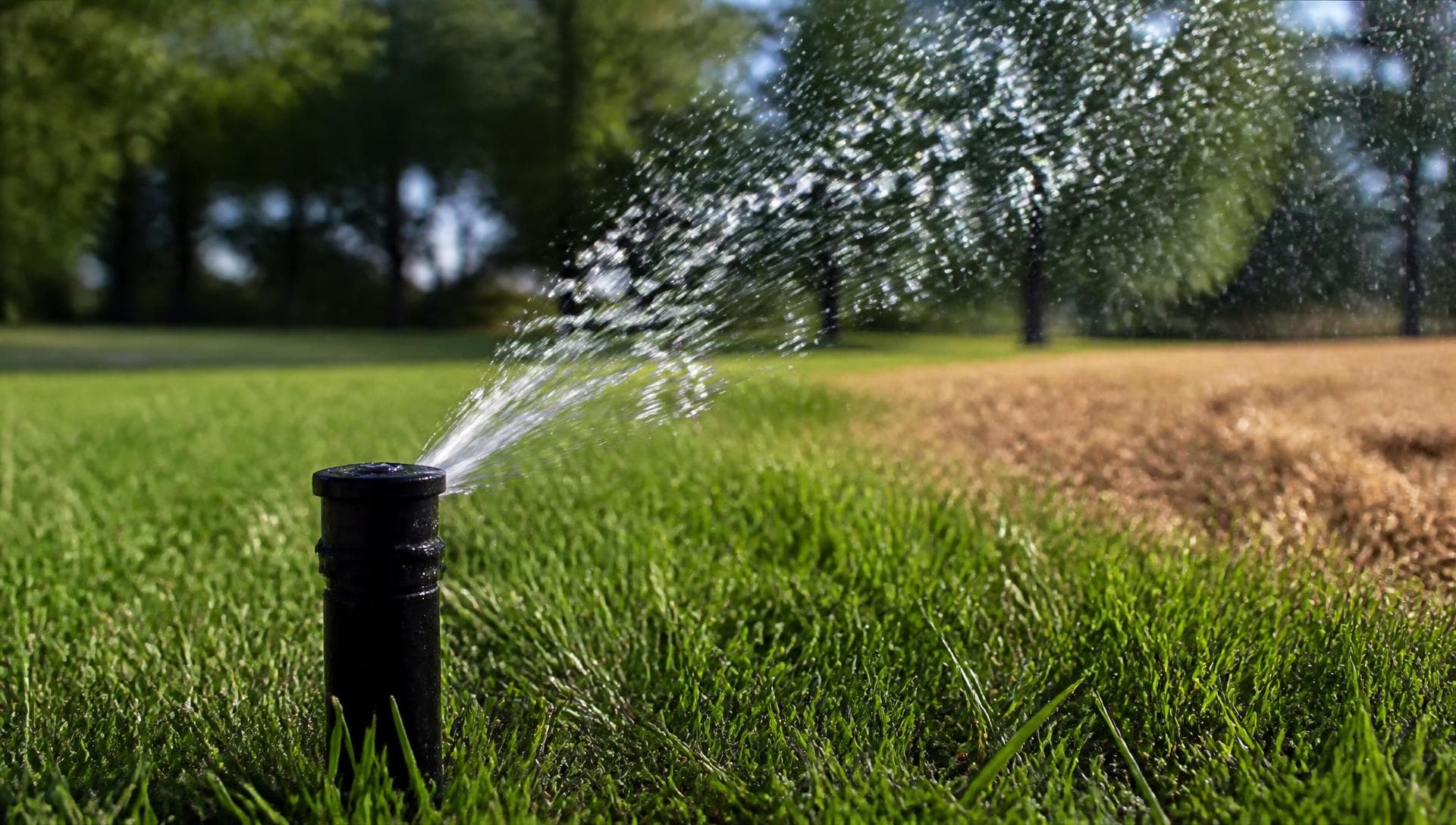
Mid-summer is when a Kentucky irrigation system earns its keep — and when its weaknesses show. Right now, in the hottest stretch of the year, your lawn is depending on every zone, every head, and every valve doing its job. A system running at less than its best does not just waste water; it quietly damages the landscape it was installed to protect.
How can you tell whether your system needs repair? Here are the signs we check for on every irrigation service call across Georgetown and Central Kentucky.
Dry Spots and Brown Patches in a Watered Lawn
If your system runs on schedule but the lawn is developing brown patches anyway, coverage has failed somewhere. Common causes include clogged nozzles, sunken or tilted heads, and heads knocked out of alignment by mowers or foot traffic. The EPA's WaterSense program recommends inspecting each zone for heads that do not pop up fully or are tilted, because they spray the wrong areas entirely — watering the fence line while the turf goes thirsty.
Kentucky's cool-season lawns naturally brown during summer dormancy, so the pattern matters. Uniform fading across the whole lawn is usually dormancy; sharp-edged dry patches next to green areas usually mean a coverage problem. The University of Kentucky Cooperative Extension's guidance on lawn irrigation is a useful reference for what healthy, properly watered Kentucky turf should look like through a hot summer.
Soggy Zones, Puddles, or Water Running Down the Curb
The opposite symptom is just as telling. Constantly wet areas, mushrooms sprouting in one section of lawn, or water sheeting onto the sidewalk point to a leaking line, a stuck valve, or runoff from water being applied faster than the soil can absorb it. WaterSense guidance notes that pooling water and runoff are signals to stop and correct the system, since overwatering promotes weeds, disease, fungus, and polluted stormwater runoff.
Leaks below ground are sneaky. A supply line leak can run for weeks, saturating one area while starving the heads downstream of it.
Weak or Uneven Spray Pressure
Heads that used to throw a full arc but now sputter or mist are telling you pressure has changed. Low pressure across one zone often means a leak or a partially closed valve. Low pressure everywhere can indicate a problem at the backflow preventer or main supply. Excessively high pressure is a problem too — it fogs the spray into fine mist that drifts away before reaching the roots and wears components out faster.
Zones That Will Not Start, Will Not Stop, or Run Out of Order
Electrical and valve problems show up as zones that skip, stick on, or ignore the controller entirely. Stuck valves waste enormous volumes of water overnight when nobody is watching. Controller faults, corroded wiring, and failed solenoids are all repairable — but they rarely fix themselves.
If your controller is an older clock-timer model, it is also worth knowing that it may be overwatering by design. Homes with clock-timer controlled systems use significantly more water outdoors than necessary, and weather-based smart controllers adjust automatically to rainfall and season. Upgrading the controller is often the single most effective improvement during a repair visit.
A Water Bill That Keeps Climbing
Sometimes the first symptom is financial. If your usage is rising month over month without a change in schedule, water is escaping somewhere — a cracked lateral line, a weeping valve, or a head broken off below grade. Comparing this summer's bills against the same months last year is a quick, free diagnostic every homeowner can run.
Sputtering Heads After Winter
Kentucky winters are hard on irrigation systems that were not properly shut down. Freeze damage from a previous season often does not reveal itself until the system is under full summer load — cracked fittings, split pipes, and damaged backflow assemblies all surface as the symptoms above. If your system was never professionally winterized, treat any of these signs with extra suspicion.
Why Prompt Repair Matters
An irrigation fault never stays the same size. Dry zones kill turf that then costs real money to reestablish. Leaks saturate soil, drown roots, and can undermine walkways and patios. Wasted water shows up on every bill until the fix happens. A prompt repair protects the lawn, the hardscape, and the budget all at once.
Kingdom Landscapes and Irrigation has installed and repaired irrigation systems across Georgetown and the surrounding counties for 18 years. We diagnose the full system — heads, valves, lines, controller, and backflow — rather than patching the visible symptom, and our irrigation services cover everything from single-head fixes to full system upgrades.
Frequently Asked Questions
Can I check for problems myself?
Yes — run each zone manually in daylight once a month during the watering season and walk the lawn while it runs. Look for tilted heads, mist instead of spray, dry arcs, and pooling. The University of Kentucky's lawn management guide also explains how to probe the soil to confirm water is actually reaching the root zone. Anything you cannot see, such as underground leaks, is where professional diagnosis comes in.
Is it worth repairing an older system?
Usually, yes. Most faults are component-level — heads, valves, nozzles, and controllers can all be replaced individually without redoing the buried pipe network. We will tell you honestly if a system has reached the point where replacement makes more sense.
How do I schedule a repair visit?
Contact us for a free estimate — we serve Georgetown and service areas across Scott and Fayette County.
Kingdom Landscapes and Irrigation — Georgetown, KY
Contact Number: 859-304-0636